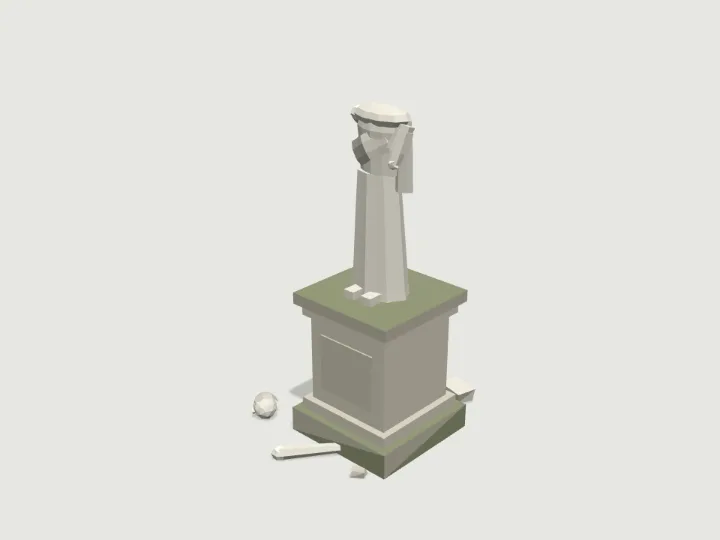
 Ancient Statue Ruin
Ancient World · 1,068 tris
Still
Ancient Statue Ruin
Ancient World · 1,068 tris
Still
drag to orbit
Building · Still
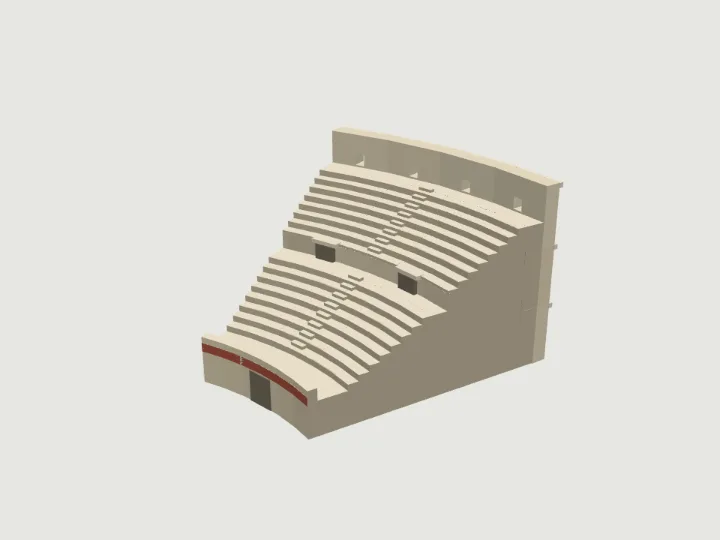
Amphitheater Section
One wedge of a Roman amphitheater: stone seat rows climbing away from the arena wall in tiers split by walkways, a central stairway, dark vomitorium passages and an outer wall of stacked arcades. Rotate copies about the arena centre (userData.tile.centre) by the span angle to close the ring; the arena is 40 m across, each seat row 45 cm high.
- Size
- 20.7 × 13.4 × 20.6 m
- Triangles
- 2,500
Tune it
5 knobs: Seat rows, Span, Outer arcade, Stone, Ruin.
Specs
- Size
- 20.7 × 13.4 × 20.6 m width × height × depth
- Triangles
- 2,500 of 6,000
- Draw calls
- 1 one vertex-colour material
- Knobs
- 5 3 presets
- Night lights
- 0 none
Passed the validator: real scale, rests on y = 0, front faces +Z, deterministic.
Use it
Code for the specimen as it is set up above; it follows your knobs.
import { createAsset } from 'https://gaitkit.com/cdn/amphitheater-section.mjs';

const amphitheaterSection = createAsset();
scene.add(amphitheaterSection); // rests on y = 0, front faces +Zimport { useMemo } from 'react';
import { createAsset } from 'https://gaitkit.com/cdn/amphitheater-section.mjs';
export function AmphitheaterSection() {
const model = useMemo(() => createAsset(), []);
return <primitive object={model} />;
}# Import amphitheater-section.glb (download below). It is a static mesh, one material per colour.
add_child(preload("res://amphitheater-section.glb").instantiate())// Import amphitheater-section.glb with glTFast (com.unity.cloud.gltfast).
// Drop it in the scene: 1 unit = 1 metre, +Z is its front.Use the gaitkit MCP server: get_variant({ "id": "amphitheater-section", "want": "default look" })
then place the result.
# MCP endpoint
https://gaitkit.com/mcpKnobs
| Knob | Type | Values | Default | What it does |
|---|---|---|---|---|
rows | range | 6 to 24, step 1 | 16 | Number of seat rows. Every 8 rows a walkway with a low wall starts a new tier. 24 rows rise about 14 m; the outer arcade grows a storey for every ~4.5 m. |
span | range | 15 to 45, step 5 | 30 | Angle of the wedge in degrees. 360 / span copies close the ring: 30 degrees needs 12 pieces, 45 needs 8. |
arcade | toggle | on / off | true | The tall outer wall of stacked arches behind the top row, like the Colosseum. Off leaves an open hillside-style theatre edge. |
stone | choice | travertine sandstone marble grey | travertine | travertine (warm cream, Rome), sandstone (golden, North Africa and Anatolia), marble (white) or grey (weathered limestone). |
ruin | range | 0 to 1, step 0.05 | 0 | 0 is complete. Higher values pull seat stones out of the upper rows, knock storeys off the outer arcade and scatter blocks. Adjacent pieces use different damage, so a ruined ring never repeats exactly. |
Presets: colosseum wedge {"rows":24,"span":30,"arcade":true,"stone":"travertine"} · provincial arena ruin {"rows":14,"span":30,"arcade":true,"stone":"sandstone","ruin":0.55} · hillside theatre {"rows":12,"span":45,"arcade":false,"stone":"marble","ruin":0.2}
Files
| File | What |
|---|---|
| amphitheater-section.glb | GLB, default look · 352 KB |
| amphitheater-section.mjs | ES module, every knob live |
| amphitheater-section.obj | OBJ, static, no colour |
| amphitheater-section-params.json | knob schema, presets, night zones |
Licence
Use it in games, apps, renders and client work, commercially and without credit. Do not resell it as an asset or train a 3D generator on it. The full licence.
More from Ancient World
Ancient Statue Ruin
Ancient World · 1,068 tris
Still
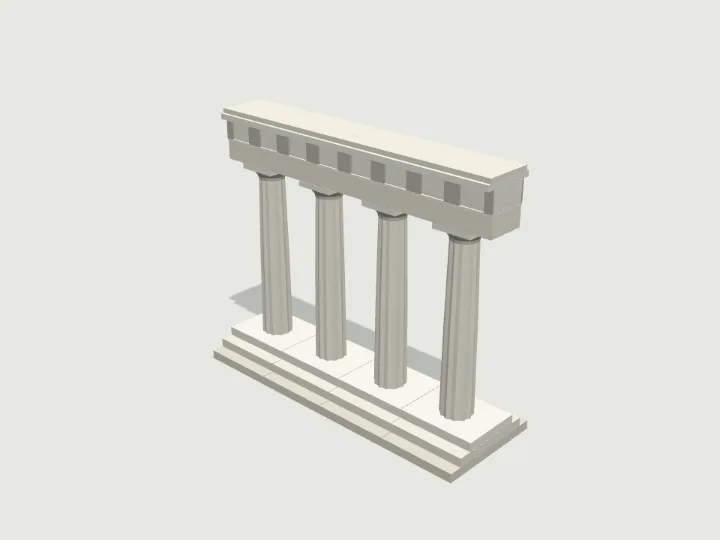 Colonnade
Ancient World · 1,616 tris
Still
Colonnade
Ancient World · 1,616 tris
Still
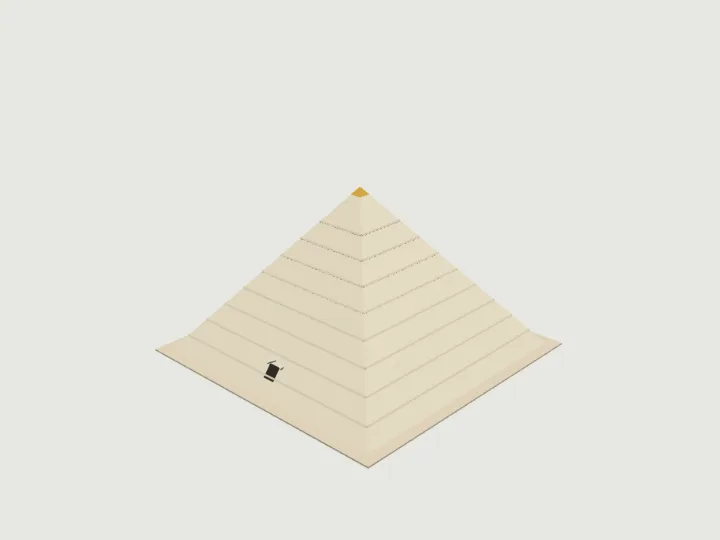 Egyptian Pyramid
Ancient World · 472 tris
Still
Egyptian Pyramid
Ancient World · 472 tris
Still
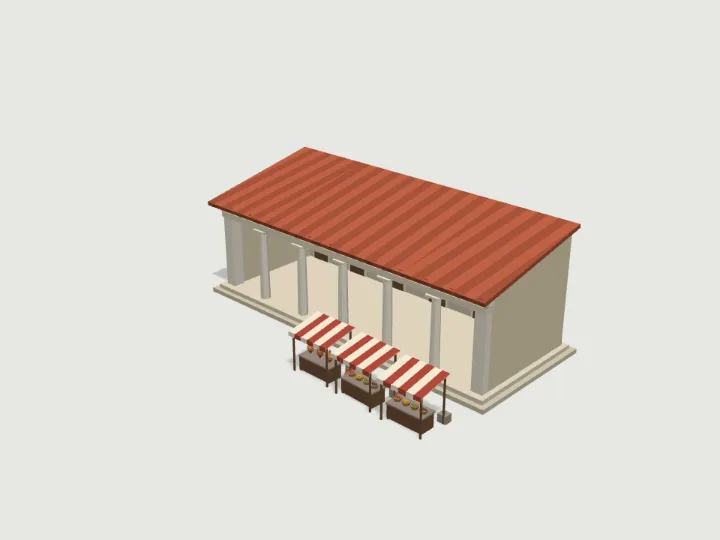 Agora Stoa Market
Ancient World · 2,912 tris
Still
Agora Stoa Market
Ancient World · 2,912 tris
Still
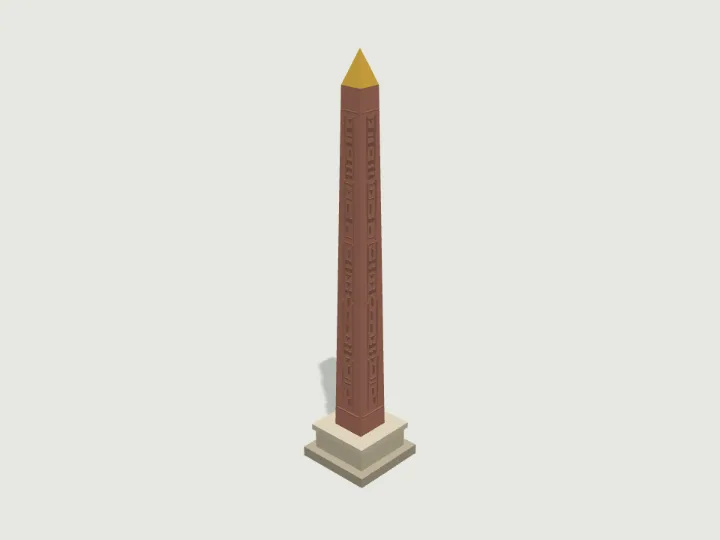 Obelisk
Ancient World · 3,092 tris
Still
Obelisk
Ancient World · 3,092 tris
Still
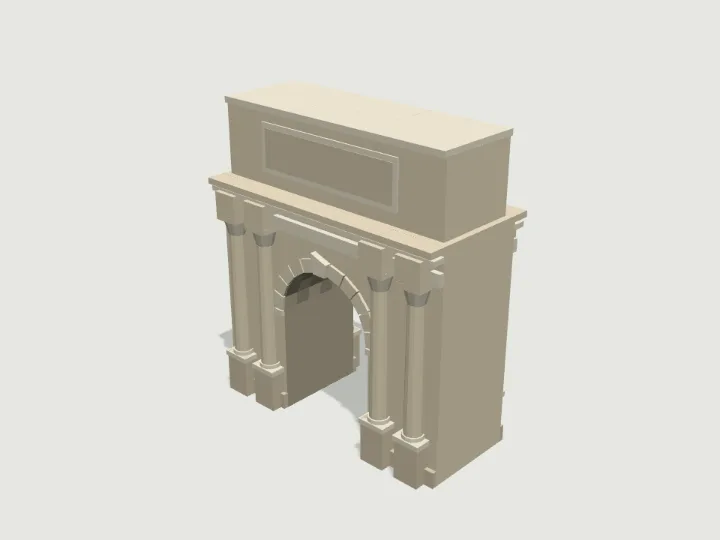 Roman Triumphal Arch
Ancient World · 3,368 tris
Still
Roman Triumphal Arch
Ancient World · 3,368 tris
Still
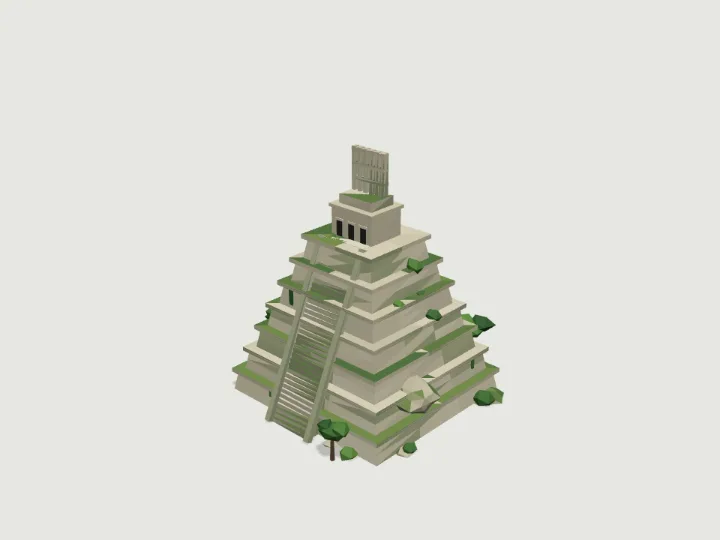 Mesoamerican Step Pyramid
Ancient World · 2,608 tris
Still
Mesoamerican Step Pyramid
Ancient World · 2,608 tris
Still
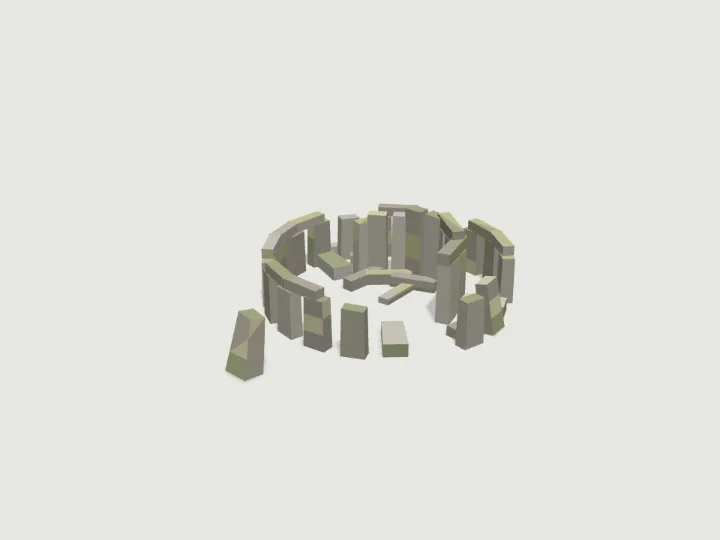 Stone Circle
Ancient World · 1,372 tris
Still
Stone Circle
Ancient World · 1,372 tris
Still