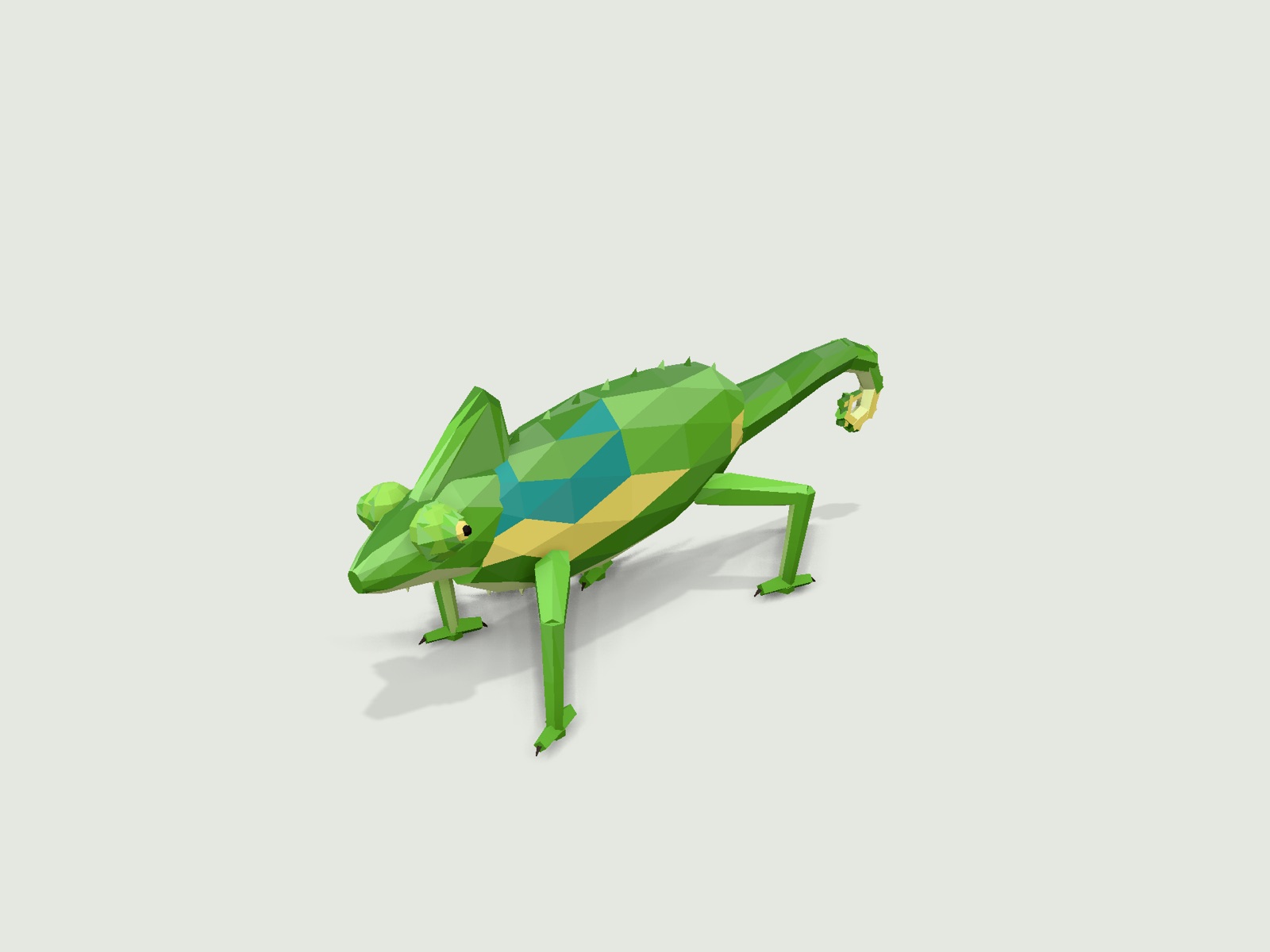
On October 27 at 07:16 Türkiye time, a visitor from Indonesia typed "chameleon" into the box on our homepage. The catalogue had nothing for it, so the box said so and put the request in the queue. The same day a walking chameleon was in the catalogue: four legs on IK, two eyes that turn on their own, a tongue that flicks out and a tail that coils into a spiral, in 1,892 triangles.
What happens when the search finds nothing
Every search box on the site, and the search_assets tool our MCP server gives to AI agents, grades its own answer: ok, poor or none. When the answer is none, the page does not show the closest unrelated thing and hope. It says the catalogue does not have it yet, logs the words as a request and tells the visitor where the request sits in the queue. An agent gets the same answer and can call report_need for its user.
That queue is the to-do list for new models. Most requests are clear (a chameleon, a grand piano), some name brands we cannot make, and a few are jokes. The chameleon was clear, an animal we did not have, and it fits the Wildlife kit next to the fox, which is that kit's free model.
Making a chameleon walk like a chameleon
A chameleon is a good test for a walking runtime because it moves so differently from a dog or a fox. It is slow and deliberate, it grips with mitten-shaped feet, and most of what makes it read as a chameleon happens above the legs.
- The legs. Four two-bone IK legs, moved in diagonal pairs. Each foot stays on the ground for 70% of the cycle, so there are long moments when all four feet hold on, and the stride is only 5 cm at real size. The feet stay planted as the body moves forward: the build rejects any walker whose planted foot slides more than 1 mm.
- The eyes. Each eye sits in its own scaly cone and turns on two axes at its own rhythm, so the two eyes rarely look the same way. This is a named part in the model's rig, so a game can also aim each eye itself.
- The tail. The tail is a chain of segments that coils into a spiral. As the chameleon walks, the coil tightens and loosens a little, starting from the tip.
- The tongue. Every few steps the tongue shoots out and back. It is a sliding part, so you can fire it on cue in your own code.
All of this is driven by distance walked, not by time. If the chameleon stops, it holds its pose; if it walks faster, the eyes and tail keep pace with the legs.
Four coats and a casque
The model has four knobs. Coat picks leaf, panther, turquoise or bark colours. Casque sets the height of the helmet-like crest on the head, from a low, rounded head like a common chameleon's through the veiled chameleon's helmet to a tall fin. Spots and stripe can be turned off for a plain, shaded body. Size goes from half real size up to a 1.8 m giant for a fantasy jungle. There are four presets: veiled, panther, jewel and "bark hider".
How it was built, and what it says about the catalogue
The model code was written with Claude Code, against the same validator every model in the catalogue has to pass: real-world scale, a triangle budget, one material, and feet that do not slide. I looked at it on the stage in every coat before it went live. The validator is what lets a request turn into a model in hours instead of weeks.
The chameleon was not the only message in the box that week. The day before, someone typed "the mantis walk is so creepy" into the search box, which is less a request than a review. The praying mantis is one of the free models, so you can judge for yourself.
If the model you need is not in the catalogue, type it into the box on the homepage. That queue decides what gets built next.
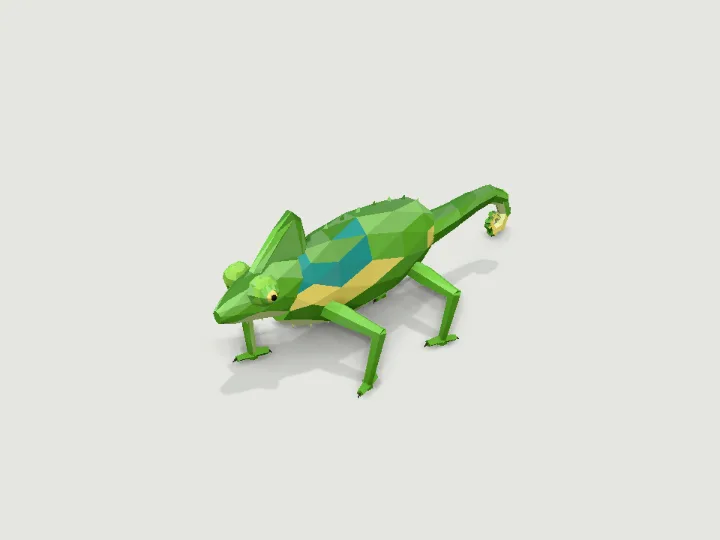 Chameleon
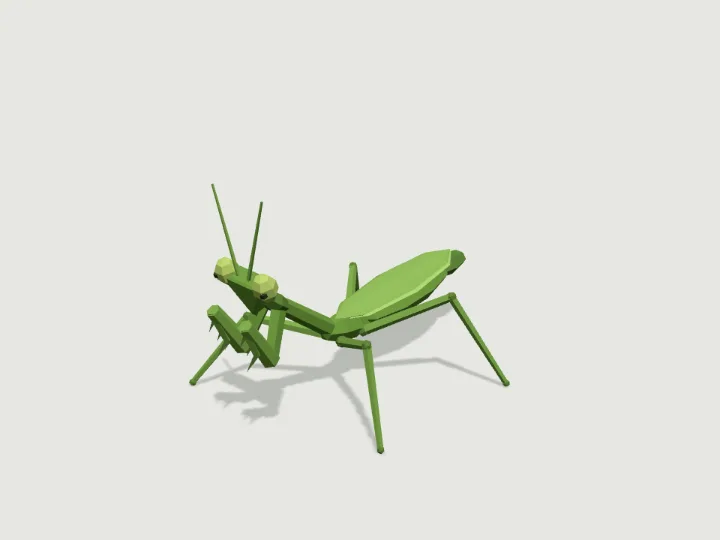 Praying Mantis
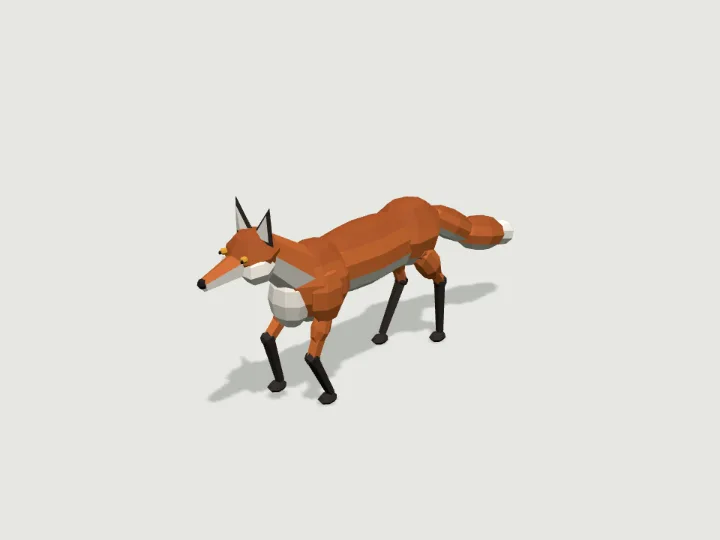 Fox