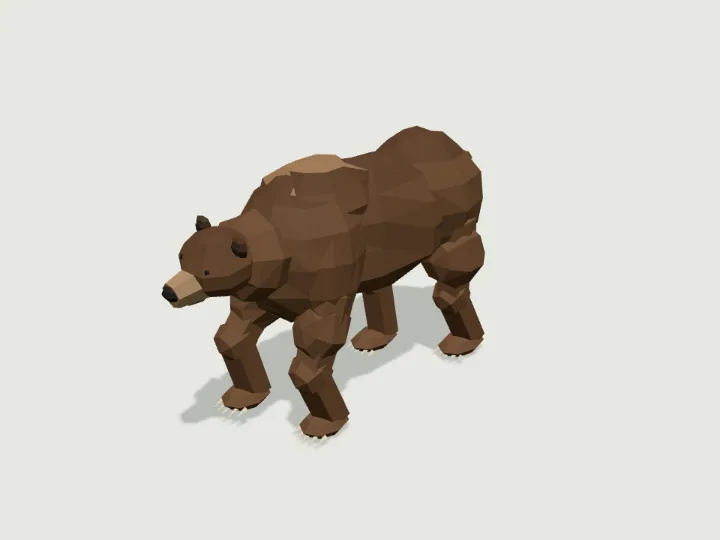
 Bear
Wildlife · 2,178 tris
Walks · 4 legs
Bear
Wildlife · 2,178 tris
Walks · 4 legs
drag to orbit · tap the ground to send it
Creature · Walks on 4 legs
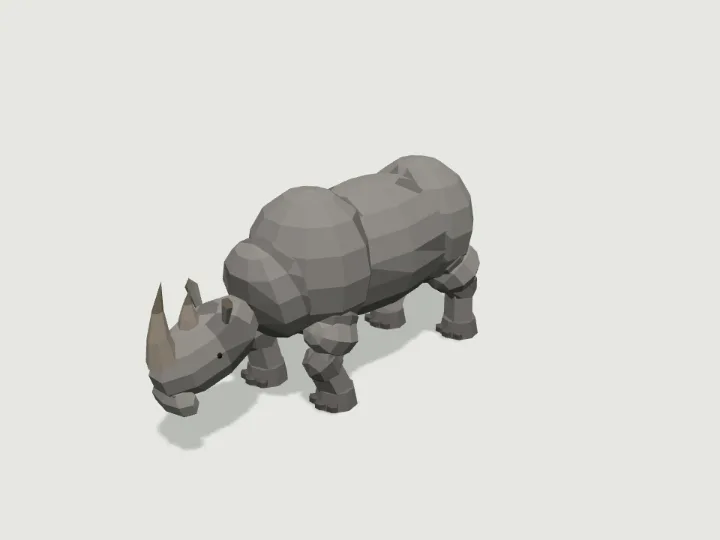
Rhinoceros
A 1.75 m-tall rhinoceros, about 3.6 m long, with thick skin folds, a big front horn and a shorter rear horn, tube ears and three-toed feet; white, black or Indian (one horn, armour plates) build. Walks a heavy lateral-sequence gait on IK legs with planted feet; the low head nods and the ears twitch.
- Size
- 1.2 × 1.8 × 3.8 m
- Triangles
- 2,326
- Kit
- Wildlife
Tune it
4 knobs: Species, Horn, Skin, Size.
Specs
- Size
- 1.2 × 1.8 × 3.8 m width × height × depth
- Triangles
- 2,326 of 6,000
- Draw calls
- 1 one vertex-colour material
- Legs
- 4 2 gait groups
- Stride
- 44 cm duty factor 0.7
- Foot slide
- 0.00 mm limit 1 mm
- Walk clip
- 1.1 m/s at playback speed 1
- Moving parts
- 4 neck · rotate, ear_L · rotate, ear_R · rotate, tail · rotate
- Knobs
- 4 3 presets
- Night lights
- 1 eye
Passed the validator: real scale, rests on y = 0, front faces +Z, deterministic, planted feet never slide past 1 mm.
Use it
Code for the specimen as it is set up above; it follows your knobs.
import { createAsset } from 'https://gaitkit.com/cdn/rhino.mjs';
import { walker } from 'https://gaitkit.com/runtime/walk.mjs';

const rhino = createAsset();
scene.add(rhino);                      // rests on y = 0, front faces +Z
const gait = walker(rhino, { ground: (x, z) => terrainHeight(x, z) });   // or omit ground for a flat floor

let dist = 0;
renderer.setAnimationLoop(() => {
  dist += speed * clock.getDelta();
  rhino.position.z = dist;
  gait.poseAt(dist);                  // feet stay planted, at any frame rate
  renderer.render(scene, camera);
});import { useMemo, useRef } from 'react';
import { useFrame } from '@react-three/fiber';
import { createAsset } from 'https://gaitkit.com/cdn/rhino.mjs';
import { walker } from 'https://gaitkit.com/runtime/walk.mjs';
export function Rhino({ speed = 1 }) {
const model = useMemo(() => createAsset(), []);
const gait = useMemo(() => walker(model), [model]);
const dist = useRef(0);
useFrame((_, dt) => {
dist.current += speed * dt;
model.position.z = dist.current;
gait.poseAt(dist.current); // feet stay planted, at any frame rate
});
return <primitive object={model} />;
}# Import rhino.glb (download below). It carries an in-place "Walk" animation.
@onready var anim: AnimationPlayer = $Rhino/AnimationPlayer
func _physics_process(delta):
velocity = transform.basis.z * speed
move_and_slide()
anim.play("Walk")
anim.speed_scale = speed / 1.1 # Walk clip covers 1.1 m/s at 1x// Import rhino.glb with glTFast (com.unity.cloud.gltfast).
animator.Play("Walk");
animator.speed = speed / 1.1 // Walk clip covers 1.1 m/s at 1xUse the gaitkit MCP server: get_variant({ "id": "rhino", "want": "default look" })
then place the result and walk it with walker() so the feet stay planted.
# MCP endpoint
https://gaitkit.com/mcpKnobs
| Knob | Type | Values | Default | What it does |
|---|---|---|---|---|
species | choice | white black indian | white | Build: white (big head carried low, wide square lip, two horns), black (smaller, head higher, hooked upper lip), indian (one horn and deep armour-plate folds studded with bumps). |
horn | range | 0.4 to 1.6, step 0.1 | 1 | Front horn length: 1 is about 60 cm, 0.4 a stub (young or dehorned), 1.6 a record horn. |
skin | choice | grey mud dark | grey | Skin colour: grey (clean), mud (coated in red-brown wallow mud), dark (wet slate grey). |
size | range | 0.35 to 1.15, step 0.05 | 1 | Uniform scale. 1 is about 1.75 m at the shoulder; 0.4 reads as a calf. |
Presets: black rhino {"species":"black","size":0.85,"horn":1.2} · indian rhino {"species":"indian","horn":0.6,"skin":"dark"} · calf {"size":0.4,"horn":0.4}
Files
| File | What |
|---|---|
| rhino.glb | GLB, default look · 306 KB |
| rhino.mjs | ES module, every knob live |
| rhino.obj | OBJ, static, no colour |
| rhino-params.json | knob schema, presets, night zones |
Licence
Use it in games, apps, renders and client work, commercially and without credit. Do not resell it as an asset or train a 3D generator on it. The full licence.
More from Wildlife
Bear
Wildlife · 2,178 tris
Walks · 4 legs
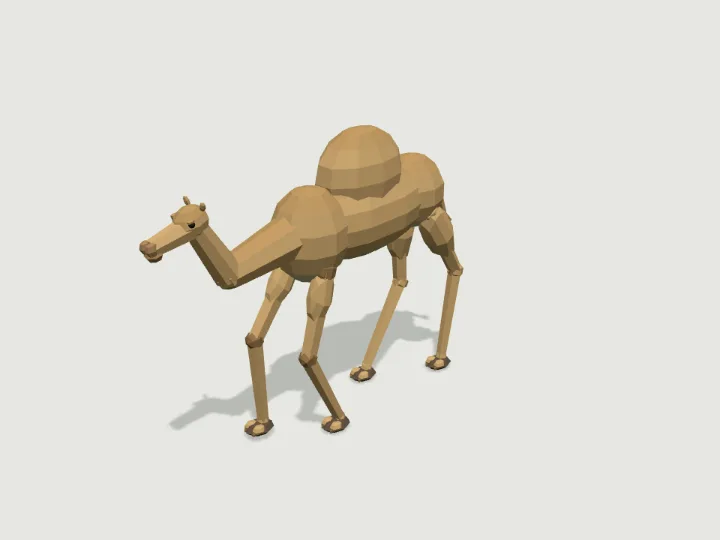 Camel
Wildlife · 2,542 tris
Walks · 4 legs
Camel
Wildlife · 2,542 tris
Walks · 4 legs
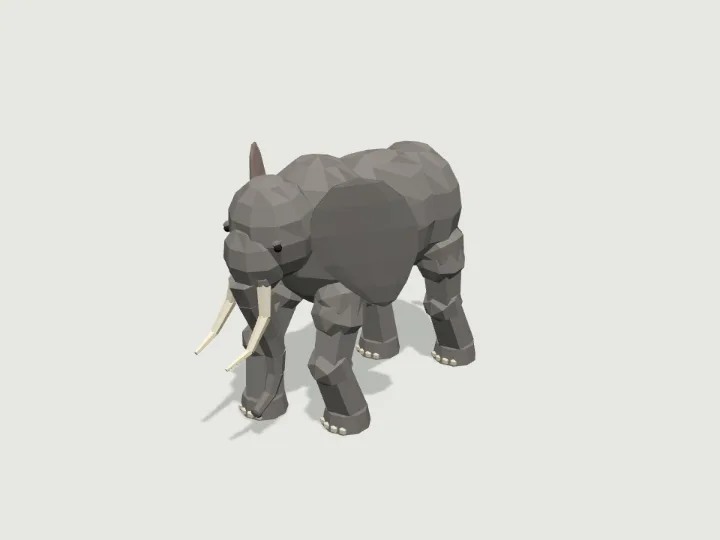 Elephant
Wildlife · 2,914 tris
Walks · 4 legs
Elephant
Wildlife · 2,914 tris
Walks · 4 legs
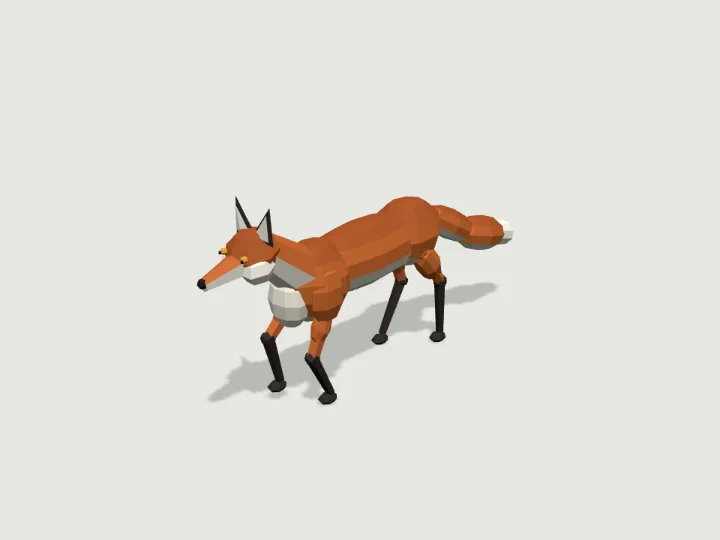 Fox
Wildlife · 1,956 tris
Walks · 4 legs
Fox
Wildlife · 1,956 tris
Walks · 4 legs
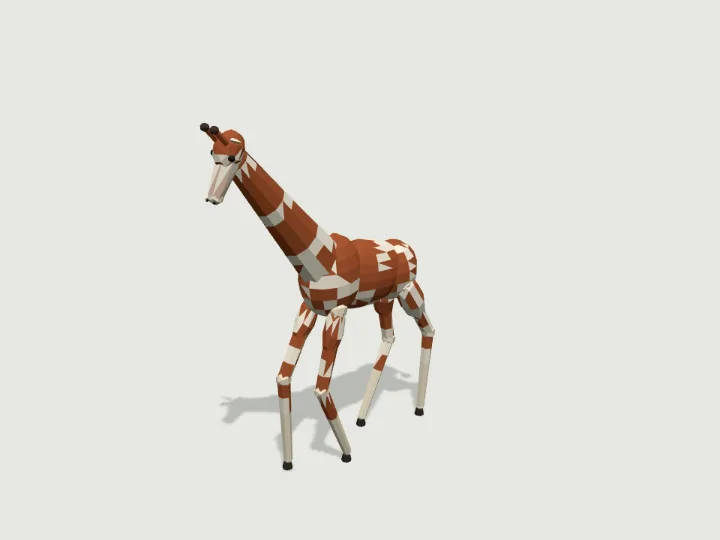 Giraffe
Wildlife · 2,872 tris
Walks · 4 legs
Giraffe
Wildlife · 2,872 tris
Walks · 4 legs
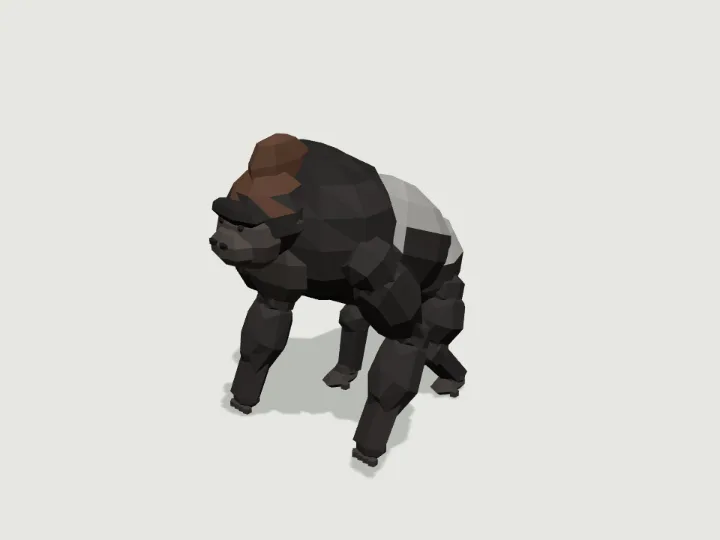 Gorilla
Wildlife · 2,268 tris
Walks · 4 legs
Gorilla
Wildlife · 2,268 tris
Walks · 4 legs
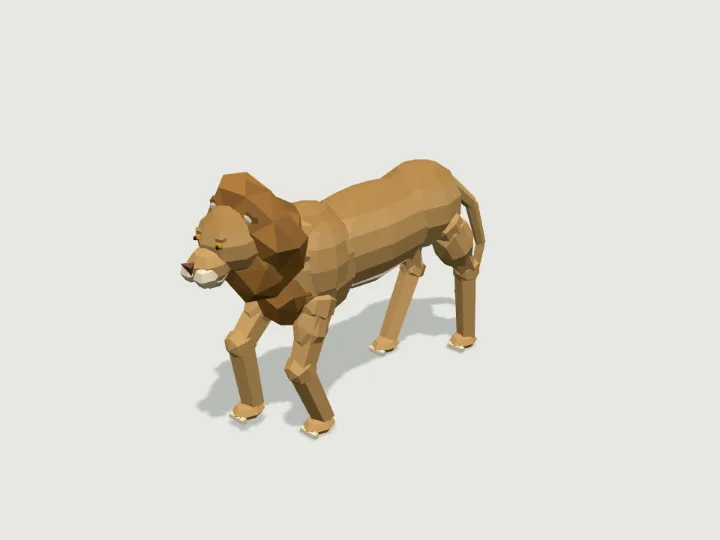 Lion
Wildlife · 2,746 tris
Walks · 4 legs
Lion
Wildlife · 2,746 tris
Walks · 4 legs
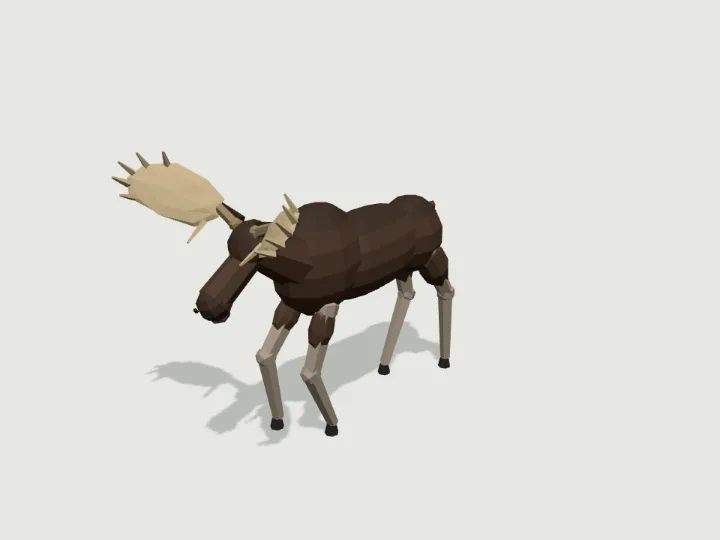 Moose
Wildlife · 2,236 tris
Walks · 4 legs
Moose
Wildlife · 2,236 tris
Walks · 4 legs